中EN
Think Long Term
Short-term prices are hard to predict consistently. DCA focuses on long-term value, on businesses that can endure, and on telling a lucky streak from real skill.
1. How Hard Is It to Predict Short-Term Prices?
There is a very famous author who has written many books: The Black Swan, Antifragile, and Statistical Consequences of Fat Tails. His name is Nassim Nicholas Taleb. But he has another, even more wonderful book: Fooled by Randomness.
The book explores randomness in financial markets and how people mistake luck for skill. Short-term prices are very hard to predict accurately, time after time.1
Even famous economists can lose a great deal of money trying to predict prices.
Irving Fisher is the economist we mentioned earlier when discussing interest. Before the 1929 crash, he said stock prices seemed to have reached “what looks like a permanently high plateau.” He thought prices had reached a high level they could hold. Before long, the market crashed, devastating his own wealth as well.2
Keynes made a costly wrong call, too. In 1920, he bet that some European currencies would fall. They rose against the dollar instead, and he lost heavily on those currency trades. Exchange rates can be just as hard to predict as stock prices.3
2. What About the Long Term?
Notice that what we have been discussing is the difficulty of predicting short-term prices. But what about the long term?
As we said earlier, society's overall productivity keeps growing over the long run. That growth also creates long-term value in the stock market. For any particular market or company, though, we still need to ask whether it can turn productivity growth into value of its own.
So with DCA, we don't predict short-term prices or rely on getting those predictions right consistently. We focus on long-term value. We are long-term investors.
We look for companies that can endure. Add the words “long term,” and the vast majority of companies no longer qualify.
This is also why technology stocks deserve attention. Technology itself can endure, evolve through iteration, improve, and build on what came before. Most businesses cannot do all four at once.
Today's technology can become the foundation for tomorrow's improvements. We don't have to start from scratch every time.
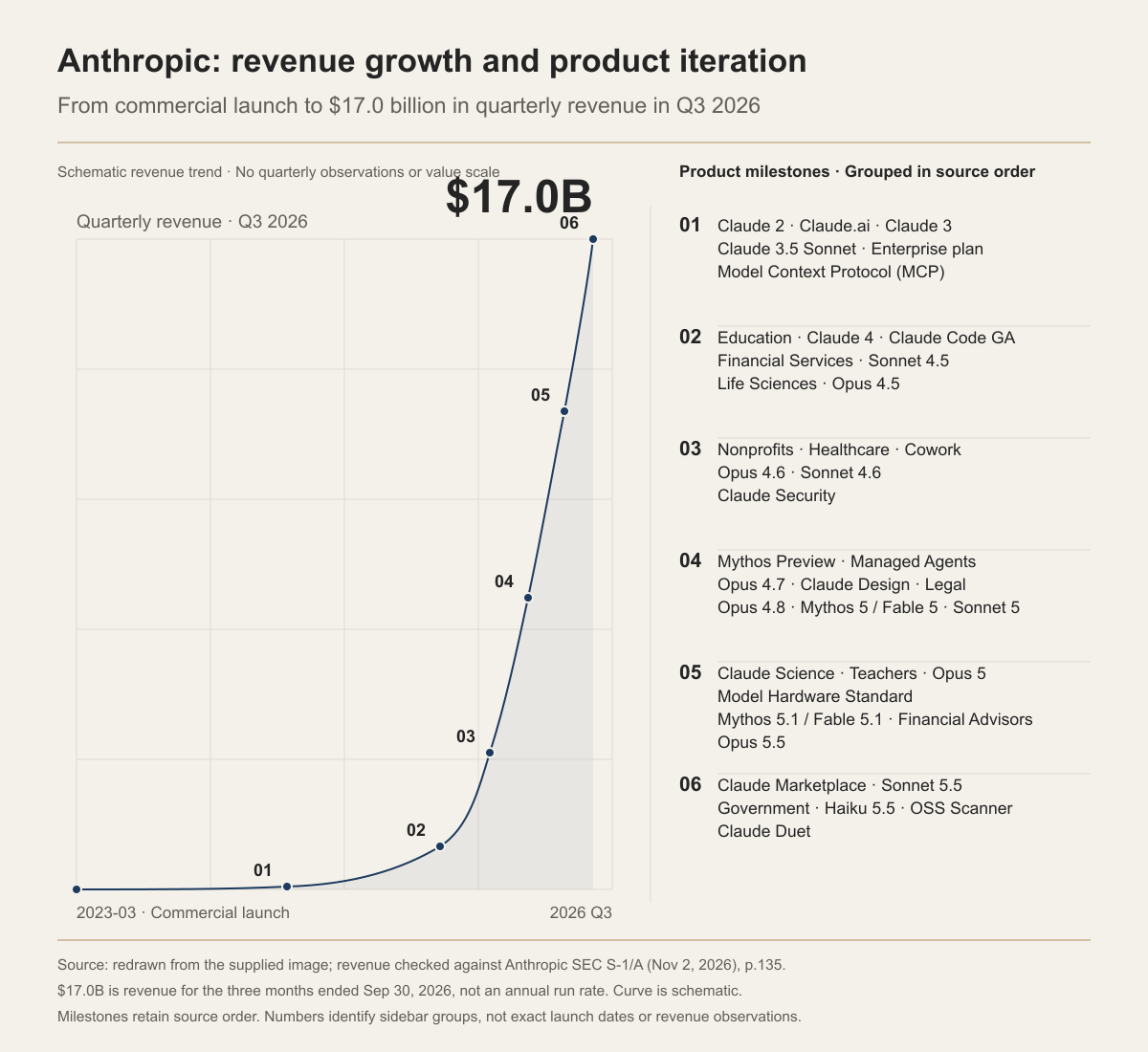
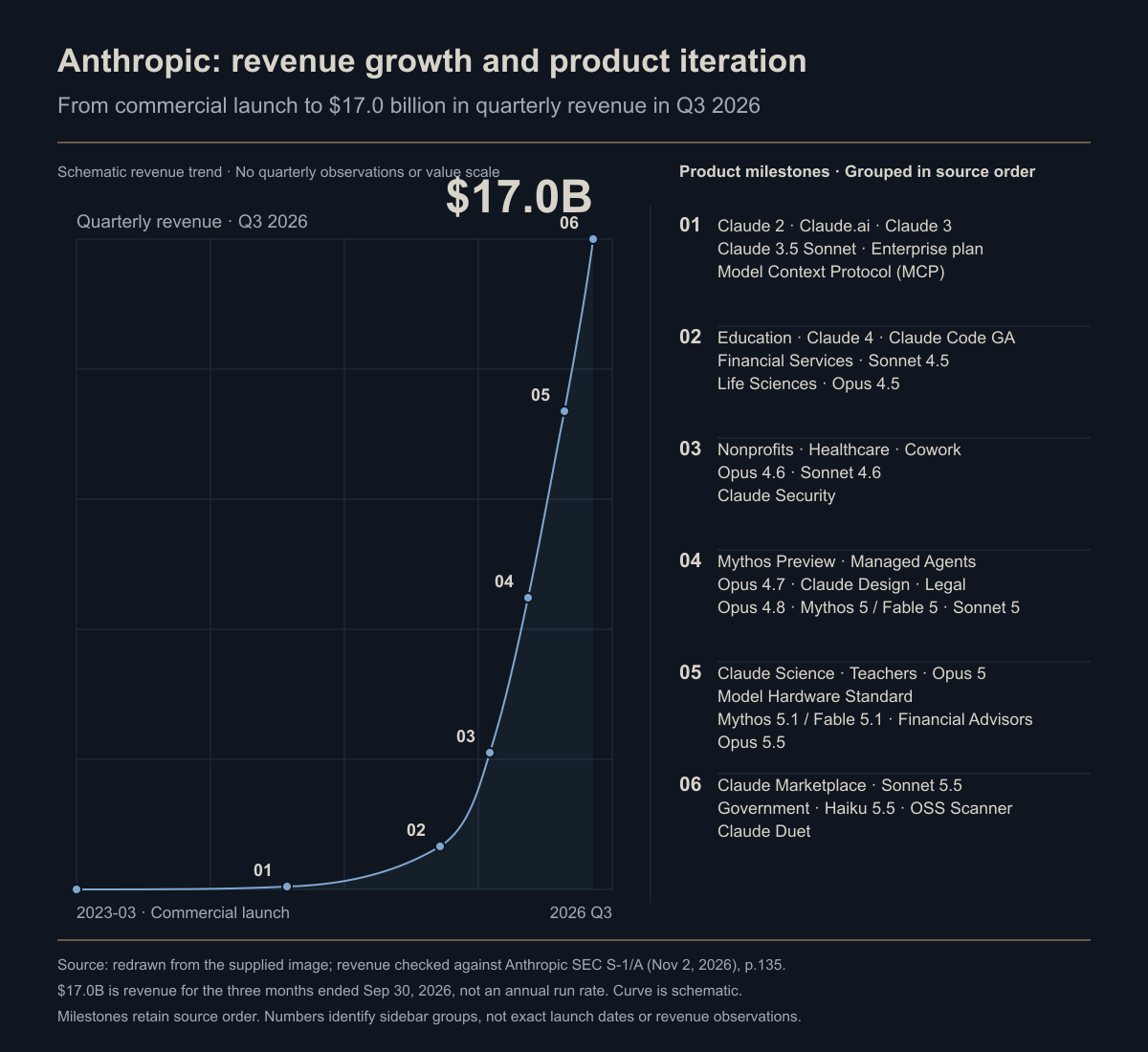
Take Anthropic, the company behind Claude. Its products keep improving, while its revenue has grown rapidly. It reported $17 billion in revenue for the third quarter of 2026.4
3. Why Consumer Demand Can Endure, Too
There is another industry that also lasts: the consumer industry. People consume from birth to death. We are consumers by nature, so consumption will always be with us.
Consumer businesses innovate, too, and their products can keep improving. They also have a very simple source of lasting strength: as long as there are people, there will be consumer needs.
Berkshire Hathaway's disclosed holdings include familiar consumer businesses such as Coca-Cola, Kraft Heinz, and supermarket chain Kroger.5
This helps explain why Buffett pays so much attention to consumer stocks, and why he says his favorite holding period is forever:
When we own portions of outstanding businesses with outstanding managements, our favorite holding period is forever.6
But why not choose consumer stocks? There are certainly many outstanding consumer businesses, including Coca-Cola, which we keep mentioning, and China's Moutai and Yunnan Baiyao.
Consumer stocks can make money and get us to the destination, too. The attraction of technology stocks is the room for growth that technological progress creates: if there's a chance to ride a rocket, why only pedal a bicycle?
4. More Than Two Hundred Millionaires
Back to stock prices. Short-term prices are hard to predict, but with so many people trading, someone is bound to get lucky. Even a broken clock is right twice a day.
Buffett told a particularly good story about this. Here is a retelling.7
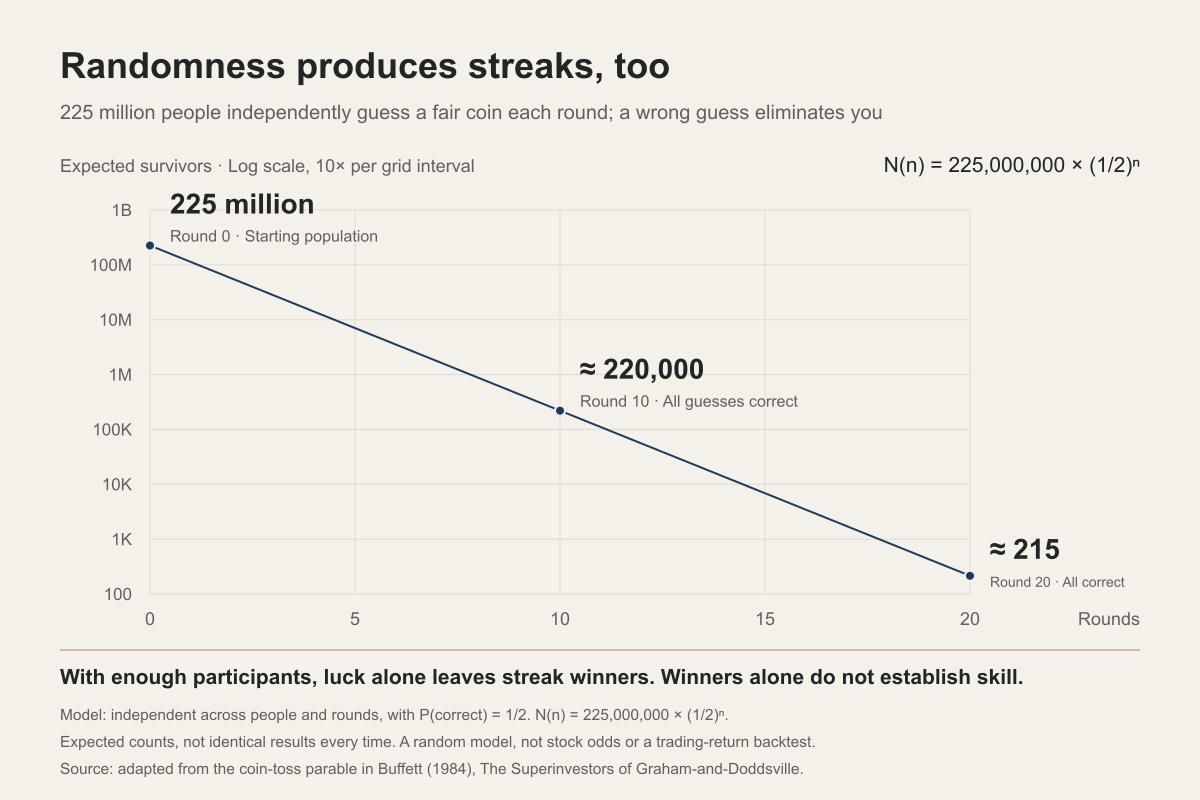
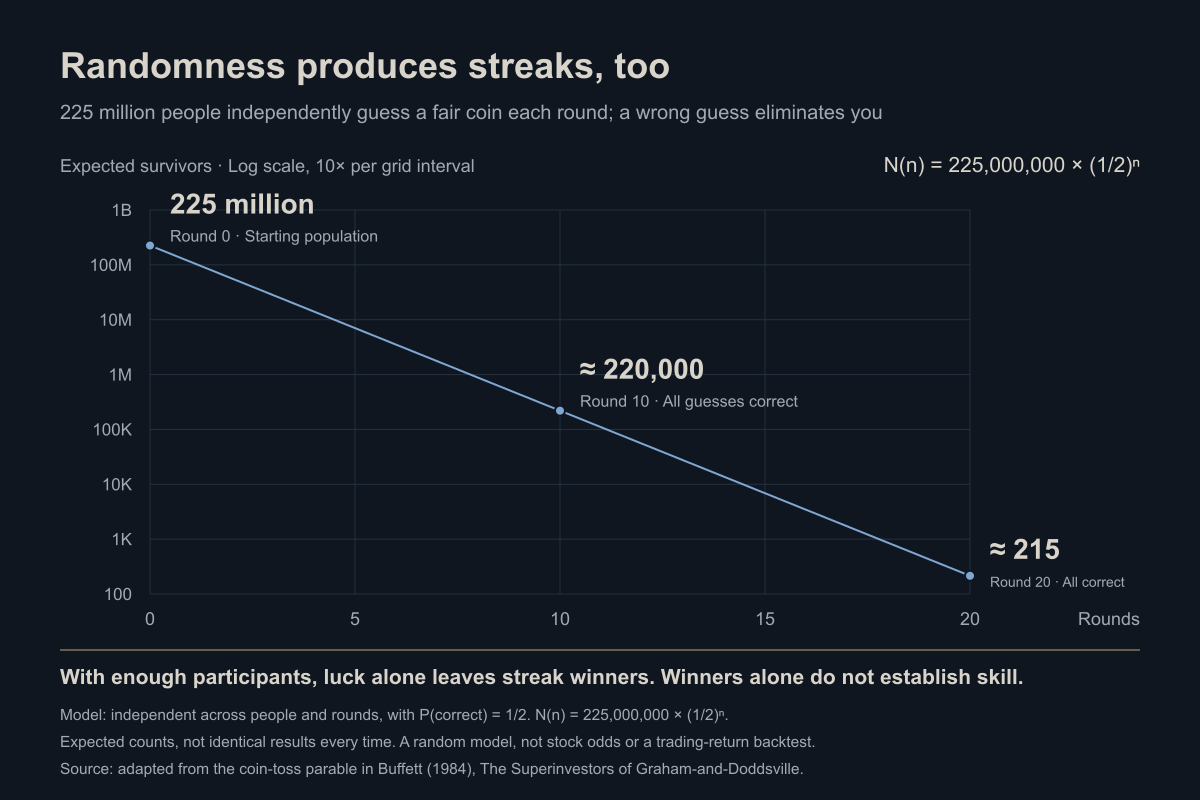
Imagine 225 million Americans, each calling a fair coin toss every day. Everyone starts by betting one dollar. Guess wrong, and you lose your stake and leave. Guess right, and you win an amount equal to your stake, then bet everything you have on the next round.
After ten days, roughly 220,000 people have called ten tosses correctly in a row. Each now has a little over a thousand dollars.
They start getting carried away, convinced they have real talent. They boast about their results and share their coin-tossing techniques with others.
Another ten days pass. Roughly 215 people have now called twenty tosses correctly in a row. Each has turned one dollar into a little over a million dollars.
Now they can write books with titles like How to Turn One Dollar into a Million in Twenty Days. They can travel around the country giving talks, teaching everyone their coin-tossing techniques.
If someone questions them, others will ask: if there is no skill involved, how can there be so many success stories? Two hundred and fifteen people is hardly a tiny number.
But in this fair-coin game, a large enough group of players will produce lucky winners like these.
Buffett went on to explain that if many winners share a value-investing approach, their long-term results deserve a closer look and cannot simply be dismissed as luck. His examples were investors who followed the ideas of Graham and Dodd.8
Remember: in financial markets, every detail unrelated to the long term is just trivia.
- Nassim Nicholas Taleb, Fooled by Randomness. Statistical Consequences of Fat Tails is published in Chinese as 肥尾效应; see the library catalogue. ↩
- Federal Reserve History, Stock Market Crash of 1929; Fisher's personal losses are discussed in the Federal Reserve Bank of Dallas's biographical essay. ↩
- Olivier Accominotti and David Chambers, If You're So Smart: John Maynard Keynes and Currency Speculation in the Interwar Years, documents severe currency losses in May 1920. ↩
- Anthropic, SEC S-1/A, November 2, 2026, p. 135; cross-checked against PYMNTS. The $17 billion is revenue for the three months ended September 30, 2026. The curve is redrawn from the supplied chart as a schematic trend, rather than a series of quarterly observations. ↩
- CNBC, Berkshire Hathaway Portfolio Tracker; the three examples are Berkshire Hathaway's corporate holdings as of June 30, 2026, verified against its SEC Form 13F holdings table, filed August 14, 2026, rather than Buffett's personal account or real-time positions. ↩
- Warren Buffett, Berkshire Hathaway 1988 Annual Letter. ↩
- Warren Buffett, The Superinvestors of Graham-and-Doddsville, Hermes, 1984, scan of the original publication, printed page 5; the rounded survivor counts in the fair-coin story follow 225,000,000 ÷ 2ⁿ. ↩
- The same essay, printed page 6 onward, discusses the investors' shared Graham-and-Dodd value-investing approach and long-term results. ↩